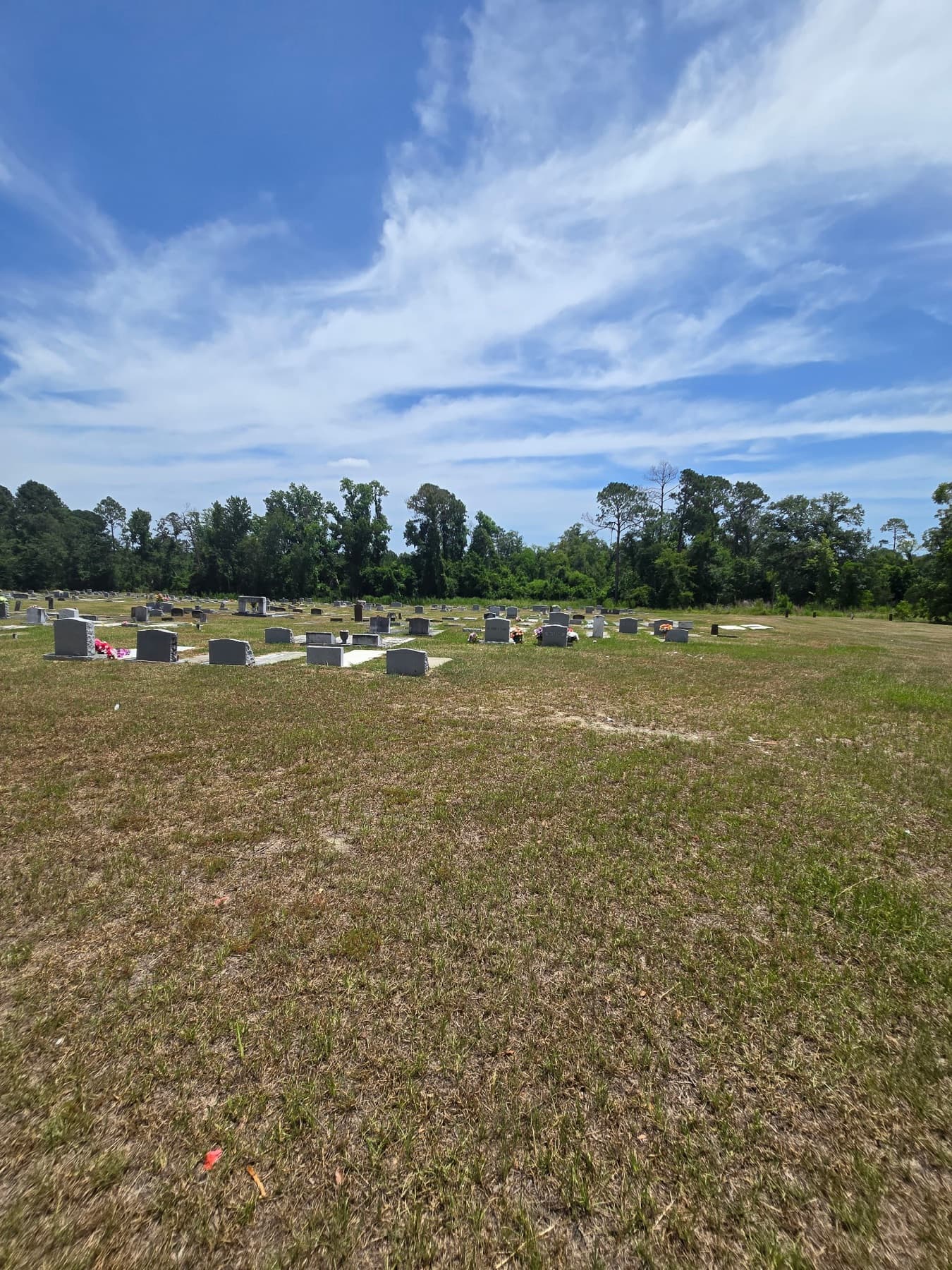
Live Oak Cemetery under a wide summer sky in Ailey, Georgia

The Live Oak Legacy Project · Ailey, Georgia

A place worth
coming home to.

A plan for the restoration of Live Oak Cemetery, prepared for the committee on First Monday, August 2026.

“Remove not the ancient landmark, which thy fathers have set.”

Proverbs 22 : 28

The committee’s charge

Restore the ground that holds our families.
Preserve the story it tells.
Hand it down better than we found it.

On First Monday weekend of August 2026, the families of Live Oak Missionary Baptist Church formed a committee to restore and beautify the cemetery behind the church, so that everyone in this community, and everyone who comes home to it, has a beautiful place to sit and visit with the people who made them.

Around the table

Anthony Lane · Diane Lane
Janice McKinnon · Myrtle Jones · Regina

with family helping from near and far

The ground

Nearly every family in Ailey has someone resting here.

544

graves documented, and counting

1891

the year the church was founded

519

people in Ailey, nearly all connected here

7

phases to bring it all the way back

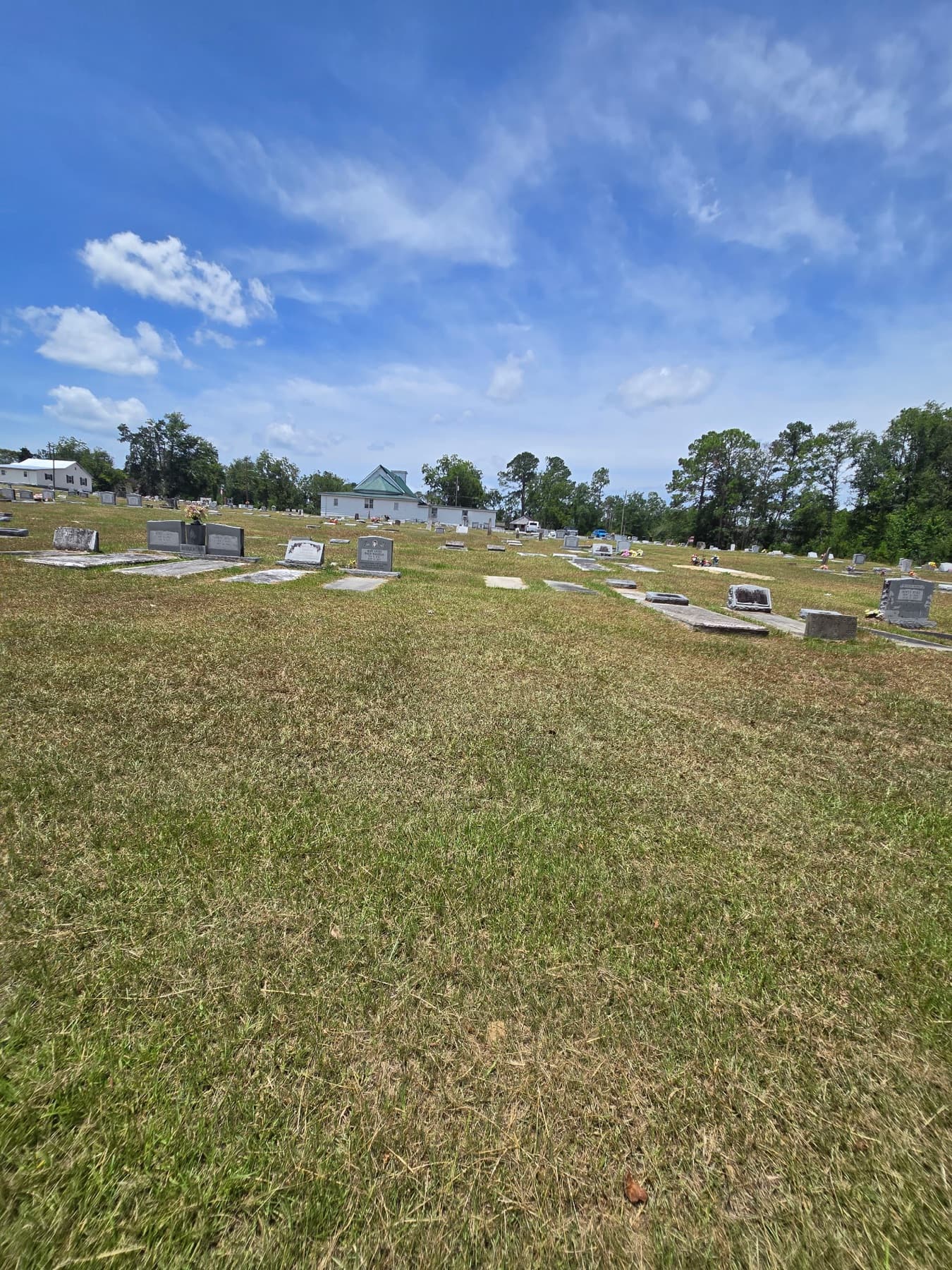
Looking across Live Oak Cemetery toward the church
Looking home toward the church · July 2026

“We were taught that way at a very early age. They taught us how to maintain, how to work hard, and how to work together as one. The people around this table are who they are because of the generations that came before us.”

Anthony Lane · Committee call · August 2026

The church is small. The community this ground serves is not. Deacons and teachers, farmers and soldiers, mothers and fathers: the people who built Ailey rest behind its church.

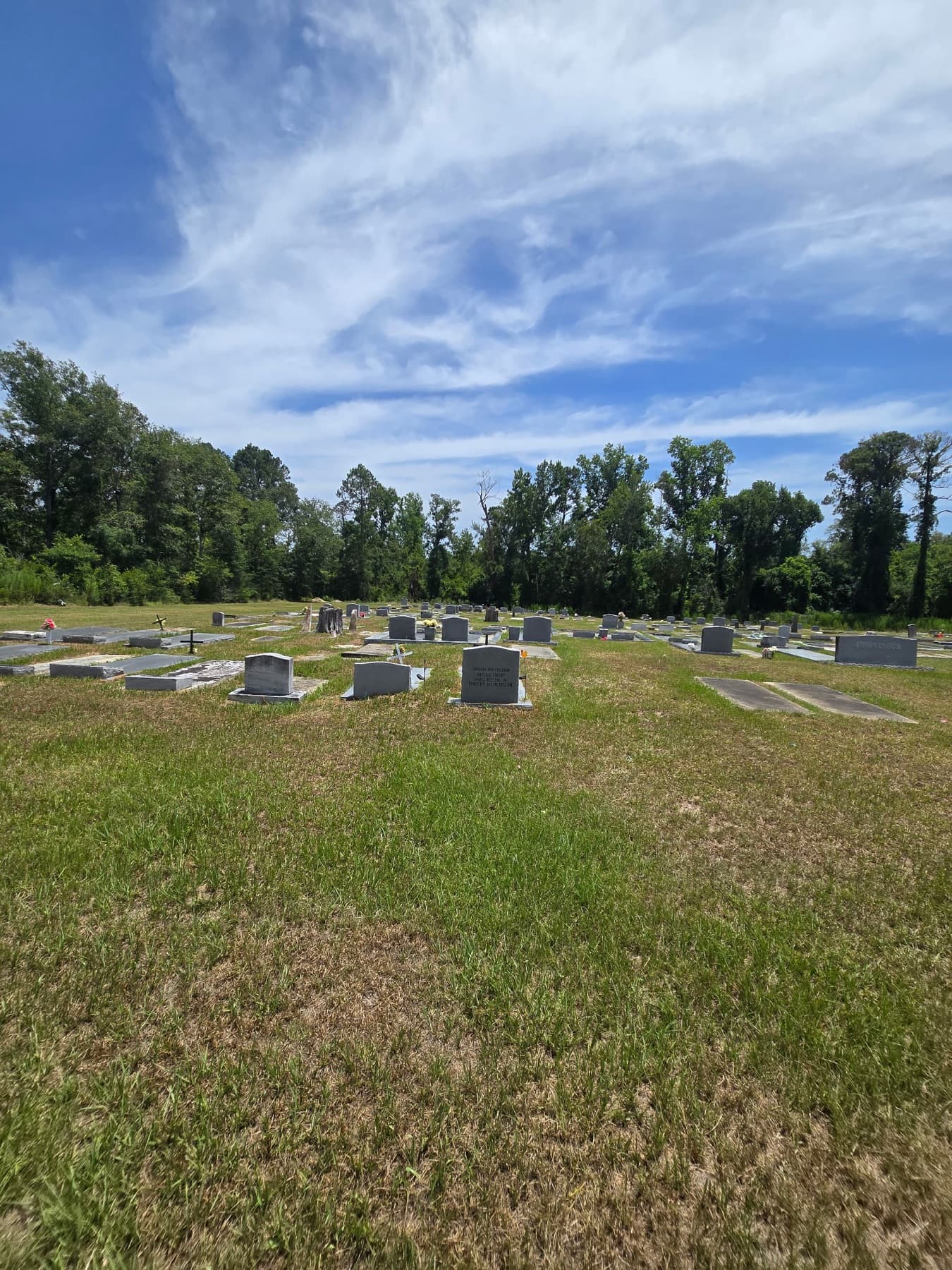
Rows of headstones at Live Oak Cemetery beneath the treeline

The tradition · First Monday in August

The cleaning. The service.
The ballgame. The dance.

Every year, on the first weekend of August, people come home to Ailey. Families who moved north generations ago drive back to join the families who stayed. Together they tend their people’s graves and make everything right, the way the elders taught.

This brief is dated Monday, August 3, 2026. First Monday.

What this ground remembers

The elders carried this story forninety-six years. The record confirms it.

The story has been handed down at Live Oak for generations: a leader dragged from his home and killed because he would not give up his place, and a funeral so large the gathering never stopped. When we searched the newspapers and records of 1930, they told the same story. And they gave the man his name.

1891

Live Oak Missionary Baptist Church is founded on May 19, beside Ailey's Rosenwald school. It becomes the anchor of Black life in this corner of Montgomery County.

1921

Walker Smith Jr. is born in Ailey on May 3. The world will come to call him Sugar Ray Robinson, the greatest boxer, pound for pound, who ever lived. His childhood home still stands in town, unmarked.

1930

Shelton S. Mincey of Ailey is seventy years old: chairman of the Montgomery County Republican Party, twice elected Georgia’s delegate to the Republican National Convention, newly elected grand secretary of Georgia’s Black Masons. Early on July 29, masked and robed men drag him from his home, carry him toward the county line, and beat him. He dies that afternoon. Newspapers across America report the killing.

He rests here, at Live Oak. Visitors still leave flowers on his grave.

The elders tell us his funeral drew mourners by the thousands, from all around and from up North, and that the community has gathered in that season ever since. The dates agree: he died on July 29, and was laid to rest in the first days of August. First Monday began at his graveside.
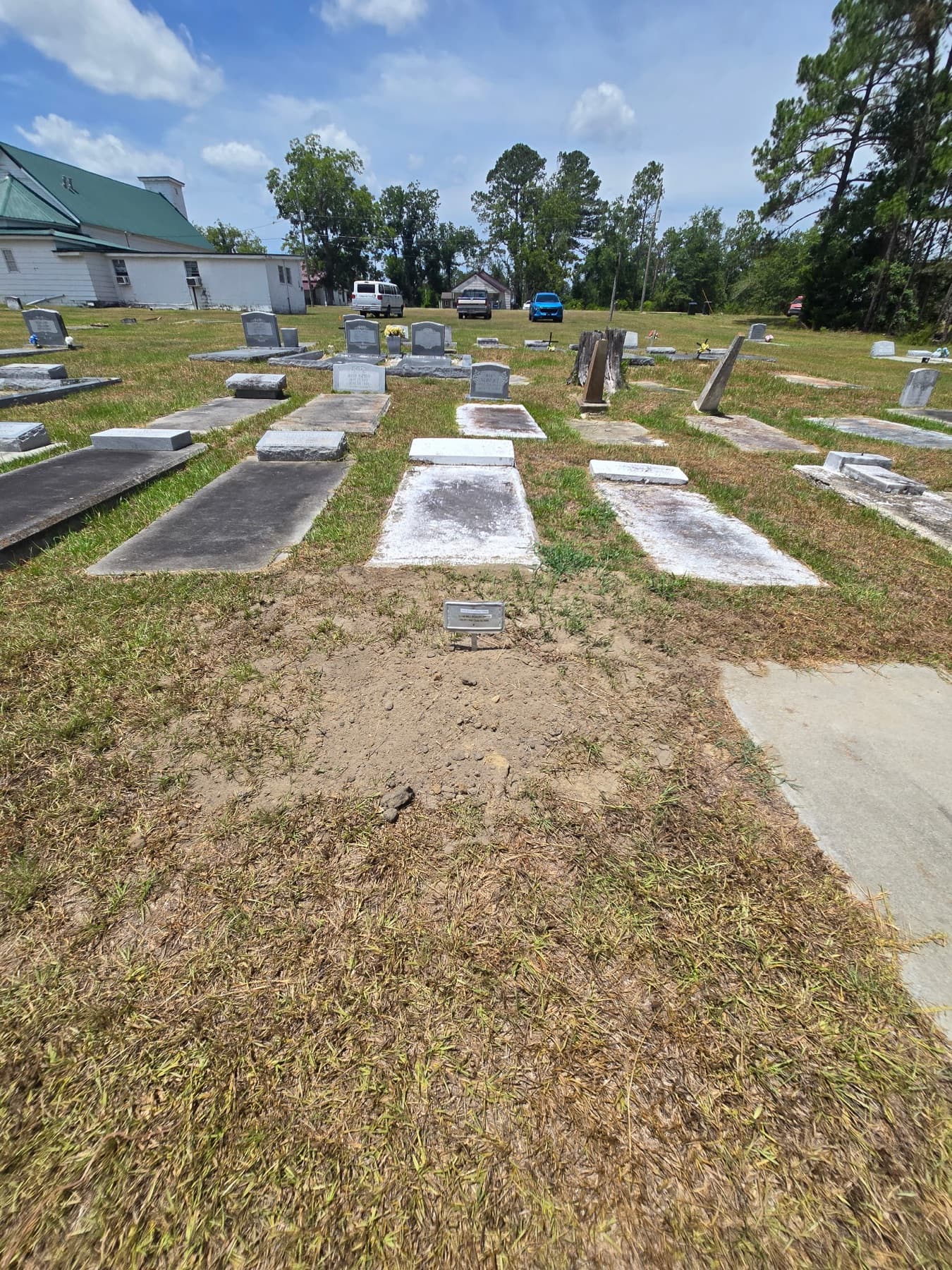
Older slab graves at Live Oak Cemetery, the church beyond
The older graves, behind the church · July 2026

1946

Dover Carter founds the Montgomery County branch of the NAACP and begins registering Black voters by the hundreds, driving them to the courthouse himself.

1948

Carter is brutally beaten on the same September day his friend and neighbor Isaiah Nixon is shot to death for voting. Carter carries the work for forty more years, and rests today at Live Oak.

2001

The documentation of the cemetery begins online. Five hundred forty-four graves are recorded in the decades that follow, photographed by family and volunteers.

2026

On First Monday weekend, the families form the Cemetery Committee. The story comes home to us.

Why it matters now

History like this brings historical markers, National Register recognition, and real restoration dollars. Our charge is to finish the work: record the elders, pull the 1930 newspapers, confirm every name, and tell it right, in granite and bronze.
The restoration roadmap

Seven phases. One promise.

The committee’s plan, exactly as Anthony drew it up: seven phases that carry the cemetery from first vision to forever. Everything else on this page serves one of these seven.

01

Vision & Planning

  • Create cemetery restoration rendering
  • Conduct site assessment
  • Develop project vision and goals
02

Budget & Resources

  • Prepare restoration budget
  • Identify grants, sponsors, and funding opportunities
03

Website & Community Outreach

  • Launch project website and vision portal
  • Share project updates and accept donations
  • Recruit volunteers and community partners
04

Grave Survey & Restoration

  • Survey all graves and document restoration needs
  • Coordinate headstone and marker replacements (family expense)
  • Prioritize restoration efforts
05

Cemetery Enhancements

  • Install dedicated family benches
  • Plant memorial trees
  • Add a water fountain
  • Improve landscaping and walking areas
06

Community Engagement & Fundraising

  • Host community meetings
  • Launch fundraising campaigns and sponsorships
  • Organize volunteer cleanup and restoration events
07

Long-Term Preservation

  • Complete restoration
  • Establish an ongoing maintenance and preservation plan
  • Continue annual fundraising and community stewardship

Preserve our past. Honor our loved ones. Build our legacy.

The budget

Data before dollars.

“We need to know exactly what our cost is going to be.”

Anthony Lane · Committee call · August 2026

No number goes public until it is real. Phase 2 builds the restoration budget with vendors on the grounds, and Phase 4’s grave survey completes it. Then the committee sets the goal, splits it into fundable pieces, and the progress thermometer goes live for the whole community to watch.

Road and drive work

So every family can reach their people in any weather.

Priced in Phase 2

Headstones and slabs

A vetted monument vendor and a clear price menu for every family.

Priced in Phase 2

Benches and gathering places

Shaded places to sit and visit, which is the whole point.

Priced in Phase 2

Entrance and signage

An entrance worthy of the name on the sign.

Priced in Phase 2

Grave repair and care

Resetting leaning stones with preservation-safe methods.

Priced in Phase 2

Annual grounds care

Funded every year, without a scramble.

Priced in Phase 2

Two fundsA Restoration Fund for the big work, an Annual Care Fund for the every-year upkeep. Cemetery gifts stay with the cemetery.

On moving gravesGeorgia law requires a county permit and a supervising archaeologist for any relocation. The plan treats consolidation as a last resort, and honors graves where they rest.

Funding pathways

Yes, there is money for this.

Anthony asked the direct question: is there grant support for a project like this, given the history buried here? The research says yes. Real programs, real dollars, and one move that unlocks almost all of them.

$275

Most funders will only pay an organization holding an IRS tax-exempt letter. The fix: form Friends of Live Oak Cemetery and file the short IRS form. It costs $275, clears in two to six weeks, and that single credential opens the National Trust, Georgia Trust, and regional foundation doors.

Do now · Free

  • Georgia African American Historic Preservation Network

    The free front door to Georgia's preservation system: site visits, National Register guidance, introductions. Our first call.

  • Places in Peril nomination4 weeks away

    The Georgia Trust's statewide list. Free to nominate, and listing brings press and hands-on help. Due September 1.

  • On the map, literally

    Black Cemetery Network, Find a Grave, and Historic Rural Churches of Georgia. Free, and every grant we file will cite this work.

Apply this fall

  • Georgia Humanities

    $1,000 to $7,500 for oral history and historical markers. This pays a historian to document the First Monday story with the elders on record.

  • Equal Justice Initiative

    EJI funds and installs historical markers honoring documented victims of racial terror. Mr. Mincey's story is squarely inside their scope.

The bigger fish · 2027

  • National Trust Action Fund

    Planning grants up to $75,000: preservation plan, ground survey for unmarked graves, National Register nomination.

  • National Park Service civil rights grants

    $15,000 to $75,000 for history and documentation, no match required. The Mincey and Carter stories are exactly what this program preserves.

  • Georgia Historical Society marker

    A second marker path, applications January through July.

A straight answerCongress created an African American Burial Grounds Preservation Program in 2022 and has never funded it. We will not build the plan around it. But a letter asking Senator Ossoff, who co-sponsored the bill, to push for its funding costs nothing and is worth sending.

The church, online

A home for Live Oak
on the internet.

The church has never had a website. It will have a beautiful one: five pages, simple to read, easy to update, with the committee’s vision portal inside it. One QR code on cards in the pews and the community lands on the Give page.

  • Welcomethe church, service times, a warm front door
  • Our HistoryFirst Monday, and the story told right
  • The Cemeteryupdates, minutes, progress, how to help
  • Givewhere the QR code lands
  • Contactreach the church and the committee

Full design mockups reach the committee before Wednesday

The new church site · early direction
Live Oak Missionary Baptist Church

A small church with deep roots.

WorshipThe CemeteryGive

Giving, made easy to trust

  • GivelifyThe front door

    Built for churches, trusted in Black congregations. Works with the church's EIN and bank account, no IRS letter needed, automatic year-end statements, and our QR code.

  • ZeffyThe upgrade

    Zero fees, funded by donor tips. We apply in parallel, and if approved we switch the QR code and keep one hundred percent of every gift.

  • Cash AppThe side door

    For quick gifts on homecoming days, swept into the church account weekly.

Two funds, minutes posted on the portal, two people counting every collection, and a public thermometer the day the budget is real. Trust, made visible.

This week

Small steps, taken now,
while the spirit is still in the air.

And one more: send this page to the family who could not be on the call.

The committee · this week

  • Send photos of the church building, inside and out.
  • Confirm the cemetery's official name, or make Live Oak Cemetery official.
  • Confirm the fund details: EIN, bank account, Cash App handle.
  • Share the First Monday article and any old programs or records.

Together · this month

  • Call the state preservation network and request a site visit.
  • Submit the Places in Peril nomination before September 1.
  • Enroll the church in Givelify and print the first QR cards.
  • Start recording the elders. Phone video is enough.

Jim · before Wednesday

  • Deliver design mockups for the church website.
  • Update this brief with the committee's corrections.

Jim · already underway

  • Pull the August 1930 newspaper coverage of Mr. Mincey from Georgia's archives, and the 1933 study of his case, to confirm the funeral account and Dr. Palmer.
  • Outline the Georgia Humanities grant application.
  • Build the grant calendar so no deadline passes us by.
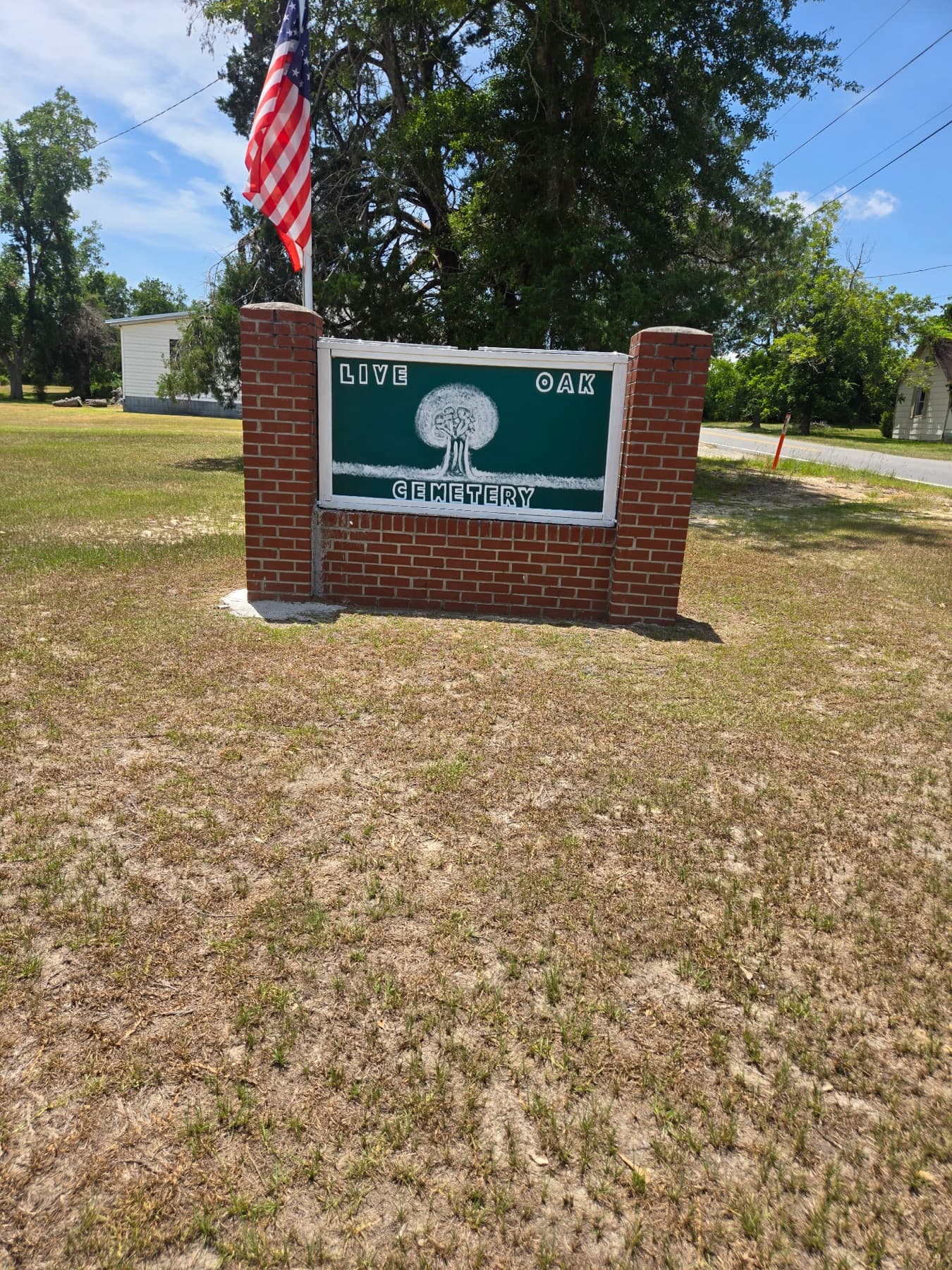
The hand-painted Live Oak Cemetery sign on brick pillars, the American flag above
The sign at the entrance · The name we build on